Dayton's Best Bat Removal
We've been voted Dayton's best bat removal company the past two years!
Get in touch
Bat Experts
Rapid Response
Trained & Educated
Licensed & Certified
About Dayton Bat Removal
Welcome to daytonbatremoval.com. We are the only qualified bat removal company in Dayton, Ohio. When people think about pest animals in their home, one of the biggest concerns will be the possibility of disease transmission, and this is certainly true when people find a colony of bats nesting in their property. However, while many people will know that bats can carry rabies, it is actually incredibly rare for a bat to transmit rabies to a human, but it is actually through their droppings that most diseases are transmitted. This is one of the most important reasons to hire a professional animal control company when you are dealing with a bat infestation, as we have all of the right equipment and training to remove the animals and their droppings safely. You can see from our online reviews on sites like Yelp and Google Reviews that we have many satisfied customers who were happy enough with our service to leave a glowing review, and we work hard to maintain that reputation on every job. When we are excluding the bats and completing the clean up after they have been removed, safety is the most important factor for us. All of our animal removal experts have the protective equipment that will let them work in an area where there are bat droppings, and they can also remove the droppings safely and in a sealed bag or container so it can be transported safely too. We can also offer a fumigation of the attic or loft space to finish the job, with the disinfectant killing any remaining spores or disease cells that may have escaped the clean. We operate 24-7-365, so don't hesitate to call us at 937-977-1900 to discuss your bat problem and schedule a fast appointment.
Residential
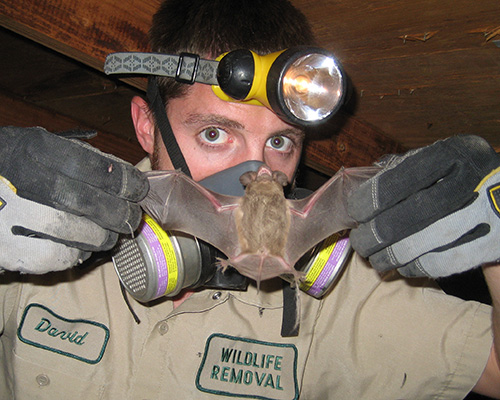
We are experts at removing bats from residential properties. Whether you have a single bat trapped in your house, a colony roosting in your attic, and/or various other problems, there is no need to worry! During our removal process, we make sure to inspect your entire home carefully, tracking down all the entrypoints bats are using to invade your place. Next, we perform a process called live exclusion (where no bats are harmed and all exit your property), then seal all entry holes completely shut. We also take care of the cleanup process after, so your home is safe and clean!
Learn MoreCommercial
Besides residential areas, we also have a wealth of experience removing bats from commercial properties! We begin by investigating the area for possible bat entrances, covering holes even as small as 1/4 of an inch. Through our live exclusion process, bats leave the building through one-way exits, and we seal up every hole afterward. Once the bats have been removed, we perform a cleanup process. This includes dealing with guano, replacing damaged insulation, and decontaminating the place.
Learn More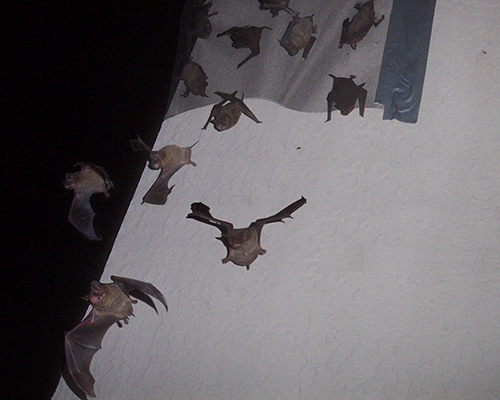
Contact us for bat removal today!
What Our Customers Say
I had a bat flying around in my house at 9pm, and CITY bat removal came right out and caught it in a net.
Sarah Lakewood
I had an annoying colony of bats stuck in my attic for a while before I finally decided to call for help. They were able to quickly and thoroughly solve the problem!
Brandon Chung
They did a great job clearing my attic of bats and didn't hurt any of the creatures.
Charlotte Demers
The technicians at CITY Bat Removal are skilled, professional, and know exactly what they're doing. Would highly recommend.
Mark O'Connor
My house stank of bats and their guano inside my wall. CITY Bat Removal not only removed the bats, they also got rid of the smell!
Alexis Ramirez
.jpg)
How Did a Bat Get in My House?
Having a warm, protected space is a comfort in any home. Bats want to enjoy those same comforts that we do. That can make attic spaces look like a great place to roost for the flying mammals. They have slightly different criteria when it comes to how to use the space, though, especially when compared to humans.
Their Home Needs
Bats start by looking for places that are high, around 30 to 40 feet from the ground. Bats can fit into small gaps and cracks in many areas around the house, including roof shingles, siding panels, joints under eaves, broken windows, chimneys, and more.
Because the majority of the species found in urban settings are smaller bats, it can be years before the odor from their droppings is even noticed. They tend to be very quiet at the roost, as well, making it even harder to notice during the day.
Repeated Home Invasion
Often, having a bat flying around your main living spaces could simply be an accident made by a young bat hunting an insect. If it happens repeatedly, that can mean that they are roosting nearby.
During the maternity season of bats, which usually occurs in early summer, their babies are born. Pups have no fur and cannot fly. When their mothers go out to hunt, they may go exploring during that time and get lost. Rarely will one fly through an open window when hunting. It might be a local colony that is not necessarily in your home specifically.
Hibernate or Migrate
Of all the species in the United States, there are only a handful of larger bats that hibernate in the same places they roost in the summertime. Those colonies are often smaller than the little brown bats. The smaller bats migrate from north to the south during the change to colder weather. They often spend some time in less temperate regions in a shorter hibernation. It is during this hibernation in southern regions that white-nose syndrome began to appear.
White Nose Syndrome
This fungus can be found in caves and mines. It attaches to the bat's nose and wings, waking it from hibernation early. The transition from hibernating to being awake takes up a lot of energy and often it depletes the store of fat that the bat needed to hibernate with. This means the bats often starve and die because there are simply not enough sources of food for them to survive if woken up too early. The syndrome caused millions of bats to die across North America since its discovery.
Roosting – What Bats Prefer
When it comes to roosting in the newest habitats, such as human buildings and homes, there is absolutely no discrepancy between new versus old homes. As long as the bats feel protected and the temperature does not fluctuate too much, they will seek out ways to get into the attic and walls. Generally, bats do not want to be in your living room. There is no food available, it is not dark enough, and the space is too open for any good protection. They are only in your living spaces when they lose their way from the roost.
Why They Get Lost
One theory on how they get lost is that sometimes bats follow air currents from known entrances to exit by. Instinct makes this a habit for them. As the weather warms up outside, we turn on our air conditioners inside. The cooler air currents can vent into the attic from various holes below that can confuse young bats into thinking the exits are in a different spot this time around. That can lead to them finding you on your couch or under the covers in your bed.
Where They Choose
The main spaces to find bats in your home are the attic and walls. Because of the way we build our homes, they can exit into your living space by crawling through walls. Temperature changes can cause them to search further into the wall structures for the right comfort level to sleep. Air ducts and piping can lead bats anywhere in your home because we leave space for them to move between the drywall and two-by-four studs. When a sudden temperature swing occurs, it can send the bats crawling through the walls. That is why it is most common to find bats in the basement during these periods of crazy weather patterns.